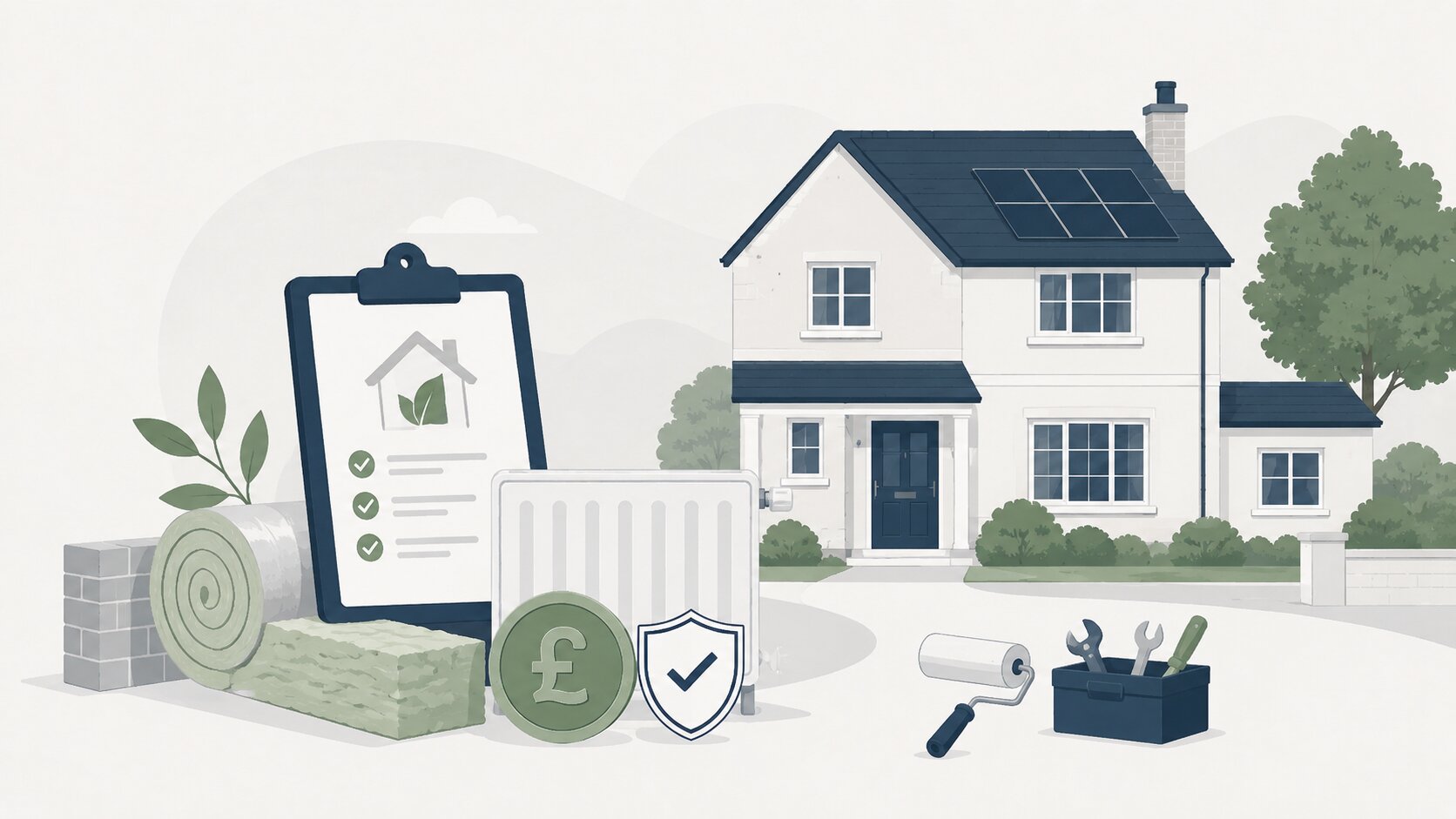
Government Grants for Home Improvements in 2026
Home improvements can be expensive, especially when the work involves heating, insulation, accessibility, safety or essential repairs. For households already dealing with rising bills, poor insulation or health-related needs, the cost can feel difficult to manage.
In the UK, government support for home improvements is usually targeted. It is rarely available for general decorating, cosmetic upgrades or lifestyle renovations. Instead, grants and schemes tend to focus on warmer homes, lower energy use, disability adaptations, low income households, vulnerable residents and properties that need essential work.
This guide explains government grants for home improvements in 2026, what types of work may be covered, and why eligibility depends on where you live, your income, your property and the purpose of the improvement.
What Counts As A Home Improvement Grant?
A home improvement grant is money or funded support that helps pay for changes to a property. In practice, this might include insulation, heating upgrades, draught-proofing, low-carbon heating, adaptations for disability needs, or essential repairs.
Some schemes pay a grant directly. Others arrange the work through approved installers, local authorities or energy companies. In some cases, the household may not receive cash at all; instead, the work is carried out if the property and applicant meet the rules.
It is important to check whether a scheme is a grant, a loan, a discount, a supplier-led offer or a local council service. The word “grant” is sometimes used loosely online, but not every home improvement scheme is free money.
Are Home Improvement Grants Available Across The UK?
Some support is available in England and Wales, some is England-only, and some is run separately in Scotland, Wales or Northern Ireland. Local councils may also run their own schemes, so two households in similar circumstances may find different support depending on their postcode.
This is why readers should be careful with generic claims about “UK home improvement grants”. A scheme that applies in England may not apply in Scotland. A grant available to owner-occupiers may not apply to private tenants. A heating scheme may require an eligible property, an eligible installer and a specific type of existing heating system.
For households unsure where to begin, it can help to look at current help available from the UK government alongside local council and devolved government websites.
Energy Efficiency Grants And Warm Homes Support
Many home improvement grants in 2026 are linked to energy efficiency. The aim is usually to make homes warmer, cheaper to heat and less wasteful. Common measures may include loft insulation, cavity wall insulation, solid wall insulation, draught-proofing, heating controls or low-carbon heating. We have an entire guide to energy efficiency grants for those on low incomes.
In England, the Warm Homes: Local Grant may help eligible households make energy-saving improvements. It is aimed at people on a low income, people receiving certain benefits, or those living in certain postcode areas. The work available depends on the property and the local delivery route.
Energy-efficiency grants are not usually designed for general renovation. A household may want a new kitchen or extension, but government energy schemes are normally focused on measures that improve warmth, reduce energy demand or support cleaner heating. So you might be able to get new double glazing, for example, if this is something that would actually help with better heat retention within your home.
This links naturally with energy bill support for homes that are expensive to heat, because poor insulation and inefficient heating can make monthly bills much harder to manage.
Boiler Upgrade Scheme
The Boiler Upgrade Scheme helps with the cost of replacing fossil fuel heating systems with low-carbon alternatives, such as heat pumps or biomass boilers where eligible. The scheme is available in England and Wales.
The grant is usually applied through an installer rather than paid directly to the household. This means the property owner normally needs to find an eligible installer, check the quote and make sure the proposed system meets scheme rules.
The Boiler Upgrade Scheme is not the same as a free boiler replacement scheme. It is aimed at low-carbon heating, not simply replacing an old gas boiler with a new gas boiler. It may still leave a remaining cost for the property owner, depending on the installation and property.
For some households, this type of grant may be relevant where heating costs are high or an older system is due for replacement. However, the suitability of a heat pump or biomass system depends on the property, insulation, budget and practical installation issues.
Disabled Facilities Grants
Disabled Facilities Grants can help pay for adaptations that allow a disabled person to live more safely and independently at home. These grants are usually handled through the local council.
Adaptations may include ramps, widened doors, stairlifts, level-access showers, changes to heating or lighting controls, improved access to rooms, or other work needed because of a disability or health condition.
This type of support is different from an energy-efficiency grant. The main question is not whether the improvement will reduce bills, but whether it is necessary and appropriate for the disabled person’s needs and reasonable for the property.
Families dealing with disability, long-term illness or care needs may also need to consider wider benefits, social care assessments and government financial assistance for low income families, especially where home adaptations are only one part of a bigger financial picture.
Essential Repairs And Local Council Help
Some local councils may offer grants, loans or discretionary help for essential home repairs, particularly where a property condition affects health, safety or independence. This varies significantly by area.
Support might relate to serious disrepair, unsafe conditions, heating failure, damp, structural concerns, or repairs needed to keep someone living safely in their home. Councils may apply means tests, property rules and local priorities.
Homeowners should not assume that every council offers the same help. Some councils may have limited budgets. Others may focus support on older residents, disabled residents, low income households or urgent hazards.
Private tenants usually have a different route. If a rented home needs repairs, the landlord is normally responsible for many repair issues. Local councils may become involved where housing conditions are unsafe or legal standards are not being met.
Scotland, Wales And Northern Ireland
Home improvement support differs across the UK.
In Scotland, Home Energy Scotland offers advice, and schemes such as Warmer Homes Scotland can support eligible households with energy-saving improvements. Some grants and loans may be available for homeowners depending on the measure and circumstances.
In Wales, the Nest Warm Homes programme can provide energy advice and improvements for eligible households. Eligibility may depend on income, benefits, property energy performance and health-related circumstances.
In Northern Ireland, energy-efficiency help has included schemes such as Affordable Warmth, with support linked to household income and property needs. Energy advice services may help households understand what is currently open.
Because devolved schemes can change, readers should check the official service for their nation rather than relying on general UK-wide summaries.
Grants For Private Tenants
Private tenants may be able to benefit from some home energy schemes, but landlord permission is often required before work can be carried out. This is because insulation, heating systems and property alterations usually affect the building itself.
The landlord may need to agree to the work, provide information or contribute in some circumstances. The tenant should not start major work without checking the rules and their tenancy position.
Tenants with serious repair problems may need to follow a different route. If a landlord is responsible for repairs and fails to act, the tenant may need advice from the council, a housing charity or a tenant support organisation.
Grants For Landlords
Some schemes allow landlords to apply or take part where eligible tenants or eligible properties are involved. However, landlords may face contribution rules, property standards and scheme limits.
A landlord should not assume that a grant will cover all upgrade costs. There may be conditions around rent, tenant eligibility, property energy rating, installer standards and how many properties can receive support.
This area is also linked to wider energy-efficiency rules for rented housing. Grants may help improve properties, but landlords remain responsible for meeting legal requirements. You can obviously save money with energy efficiency actions, which can make some measures particularly appealing.
Are Grants Available For Solar Panels?
Solar support has changed over time, and the availability of grants depends on the scheme, property and location. Some households may find solar panels included in broader energy-efficiency or warm homes programmes, while others may need to look at finance, local schemes or future policy changes.
Solar panels are not automatically free through government support. A household should check whether a scheme is genuinely government-backed, whether the installer is approved, what costs remain, and what happens if the property is sold.
As with heat pumps and insulation, it is worth being cautious about adverts that suggest everyone qualifies. Eligibility usually depends on more than simply owning a roof. If you’re looking for specific advice on accessing government grants for solar panels, then our guide gives you the details.
Avoiding Misleading Grant Claims
Home improvement grants are a common area for confusing or exaggerated marketing. Some adverts use phrases such as “free government grant” or “claim now” without explaining the eligibility rules clearly.
Before giving personal details, households should check whether the scheme is listed on an official government, council, energy regulator or recognised advice website. They should also check the installer, read the terms and avoid pressure to sign quickly.
Warning signs can include unclear company names, upfront fees for “grant checks”, unrealistic promises, poor paperwork, or claims that everyone qualifies. A genuine grant scheme should be clear about eligibility, the work covered and who is responsible for any remaining cost.
Home Improvements And Mental Health
A cold, damp or unsuitable home can affect wellbeing. Poor sleep, stress over bills, difficulty moving around the home, or worry about repairs can all add pressure.
However, mental health funding and government support routes are usually separate from home improvement grants. Someone may need NHS support, benefits advice or local council help as well as housing-related support.
In some situations, a mental health condition may be relevant to disability adaptations, social care assessments or vulnerability support. But it will not automatically qualify a household for every home improvement scheme.
Home Improvements And Private Schools
Home improvement grants should not be confused with school fee support or education funding. A grant for insulation, heating or disabled access must normally be used for the purpose stated by the scheme.
This is different from government financial assistance to private schools, which involves school funding, bursaries, scholarships, special educational needs placements and tax policy rather than household property upgrades.
Families should avoid assuming that one type of government support can be redirected to another cost. Most schemes have strict rules about how support can be used.
Home Improvements For Small Business Premises
Some small business owners work from home, and some own mixed-use buildings or small commercial premises. However, domestic home improvement grants are usually separate from business funding.
A homeowner may be eligible for a household energy scheme even if they are self-employed, but the grant is usually linked to the property as a home. Business premises, offices, workshops or commercial spaces may need different funding routes.
This is why what government grants are available for small businesses is a separate question. Business grants usually focus on growth, training, premises, innovation, equipment or local economic development, not private household renovations.
How To Check Eligibility
A sensible first step is to identify the type of improvement needed. Is the issue energy efficiency, heating, disability access, safety, urgent repair or general renovation?
The next step is to check:
- whether the scheme is available in your nation or local area
- whether you must own the property or can apply as a tenant
- whether landlord permission is needed
- whether income, benefits or postcode rules apply
- whether the property has to meet certain energy ratings
- whether the installer must be approved
- whether the grant covers the full cost or only part of it
Households should also keep copies of bills, benefit letters, income evidence, tenancy agreements, ownership documents, medical or disability-related evidence where relevant, and any property assessments.
Conclusion
Government grants for home improvements in 2026 are mainly focused on warmer homes, lower energy use, low-carbon heating, disability adaptations and essential support for households in need. They are not usually available for cosmetic upgrades or general renovation projects.
The most relevant route depends on the property, location and reason for the work. A low income household in England may need to check Warm Homes support. A disabled resident may need to ask the council about a Disabled Facilities Grant. A homeowner in Wales, Scotland or Northern Ireland may need to use devolved schemes and local advice routes.
Because schemes change and eligibility rules can be detailed, readers should check official sources before applying. Clear information matters, especially when home improvements, bills and public support overlap. Commerce Grants welcomes contributors who can share clear finance guidance with readers and explain funding routes in a practical, accessible way.


