Exploring Free Grants For Low Income Families
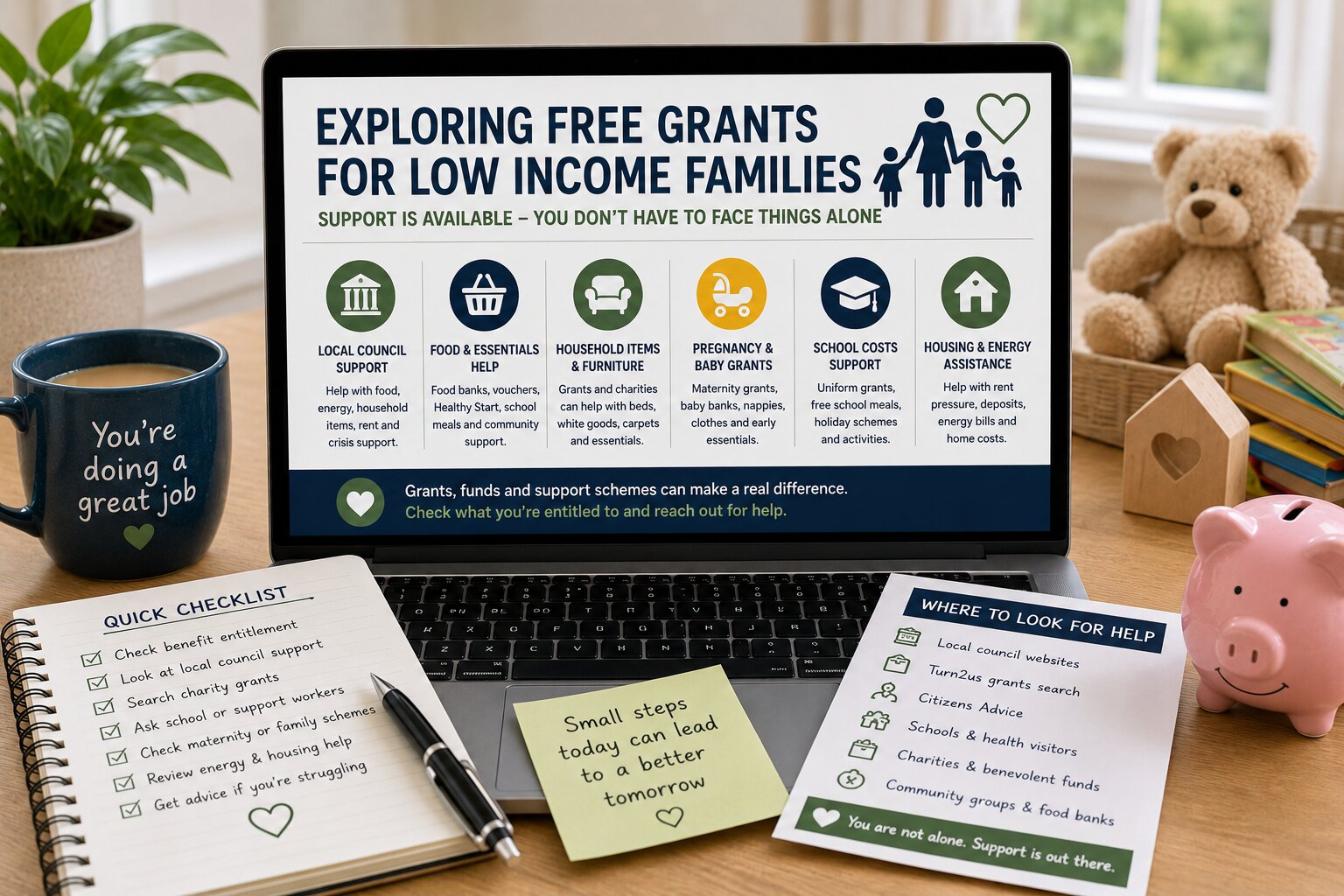
Low income families often look for free grants when essential costs become difficult to manage. Food, energy bills, rent pressure, school costs, furniture, baby items, travel, clothing and broken household appliances can all create strain, especially where income is already limited.
The word “free” is important. A grant usually means support that does not have to be paid back. This is different from a loan, advance or credit arrangement, where money must be repaid later. In practice, family support in the UK can come through a mixture of grants, vouchers, discounts, council support, charity funds, benefit schemes and practical help.
There is no single grant that every low income family can automatically claim. Support depends on where the family lives, what the money is needed for, whether children are in the household, benefit entitlement, disability, pregnancy, housing status, crisis circumstances and local funding rules.
This guide explains the main routes to check and how families can approach the search sensibly.
What Counts As A Free Grant?
A free grant is usually money, goods, vouchers or direct support that does not need to be repaid. It may come from a local council, charity, government-backed scheme, energy supplier fund, school, housing association or specialist support organisation.
Some grants are paid directly into a bank account. Others are provided as supermarket vouchers, fuel vouchers, supplier credits, white goods, furniture, baby equipment, school uniform support or direct payment to a third party.
Families should always check the rules. Some support is described as help or assistance rather than a grant. Other support, such as a Universal Credit Budgeting Advance, can help with essential costs but is repayable from future benefit payments. That means it is not a free grant.
The safest approach is to ask: does this have to be repaid? If the answer is yes, it should be treated as borrowing, even if it comes through a benefit system.
Local Council Support
For many low income families, the local council is the first place to check. Councils may provide emergency help with essentials such as food, energy, household items, furniture, rent-related pressure or short-term crisis costs.
In England, council support now sits under the Crisis and Resilience Fund. The details are delivered locally, so one council may offer different support from another. Some councils may provide cash payments, vouchers, referrals, direct help with goods or links to local charities.
In Scotland, Wales and Northern Ireland, different systems apply. Scotland has the Scottish Welfare Fund, Wales has the Discretionary Assistance Fund, and Northern Ireland has Discretionary Support.
The names and rules vary, but the broad purpose is similar: helping people who are facing crisis, hardship or essential living costs they cannot meet.
Families should search their own council website and look for terms such as crisis support, local welfare assistance, emergency help, cost of living support, household support, hardship fund or welfare provision.
Help With Food And Essentials
Food support may come through several routes. These can include local council schemes, food banks, community pantries, school referrals, charity projects and supermarket vouchers.
Some families with young children may also qualify for Healthy Start in England, Wales and Northern Ireland, or Best Start Foods in Scotland. These schemes are not general cash grants, but they can help with the cost of milk, healthy food and vitamins for eligible pregnant women and families with young children.
Families should also check school-based support. Free school meals can reduce weekly costs, and holiday food schemes may provide help during school holidays. Schools may also know about local uniform support, hardship funds or food voucher schemes.
If food pressure is part of a wider financial crisis, families should not focus only on food parcels. It may also be worth asking about benefit entitlement, energy support, rent help and debt advice.
Grants For Household Items
Many low income families need help with basic household items such as beds, cookers, fridges, washing machines, flooring, curtains, bedding or furniture. These items are expensive, but they are often essential to family life.
Local councils may be able to help in some cases, particularly where there is a crisis, a new tenancy, children in the household, disability, domestic abuse, homelessness or another vulnerability. Some housing associations also have hardship funds or tenancy sustainment support.
Charity grants may also help with household items. Some charities support families generally, while others support people based on occupation, health condition, disability, local area, faith, age or personal circumstances.
A family searching for help with household items should be specific. Search terms such as “washing machine grant”, “beds for children charity”, “furniture grant low income family” or “help setting up home” may produce better results than a general search for “free grants”.
This also connects with decorating grants on Universal Credit, where the issue is often not decoration alone but making a home safe, warm and liveable.
Charity Grants For Low Income Families
Charitable grants can be one of the most useful but least understood forms of help. Many charities provide grants to individuals or families facing hardship, but their eligibility rules can be very specific.
Some charities support people who work, or have worked, in certain industries. These are often called benevolent funds. Others support families with disabled children, carers, people affected by illness, women escaping abuse, older people, young parents, students, veterans or residents of a particular area.
A family may qualify because of a parent’s job history, a child’s condition, a local connection, a caring role or a specific crisis. This is why grant search tools can be useful.
When applying to charities, families should be ready to explain the need clearly and provide evidence. A charity will usually want to know why support is needed, what other help has been tried, and how the grant would improve the situation.
Support For Families With Disabled Children
Families raising disabled or seriously ill children may have additional costs that are not fully covered by regular income or benefits. These might include extra laundry, specialist equipment, travel, sensory items, bedding, clothing, activities, technology or short breaks.
Family Fund is one of the best-known grant providers for families raising disabled or seriously ill children and young people on a low income. Eligibility is not automatic and depends on the child’s needs, the family’s circumstances and the current rules.
Families should also check specialist charities linked to a child’s condition, disability or health needs. Some charities can help with equipment, travel, family breaks, therapy-related costs or practical household items.
This type of support is different from a general hardship grant. It is usually linked to the child’s additional needs and the impact on family life.
Pregnancy And Baby Grants
Pregnancy and the arrival of a baby can create sudden extra costs. Low income families may be able to check maternity-related grants and support schemes.
In England, Wales and Northern Ireland, the Sure Start Maternity Grant may provide a one-off payment to eligible families towards the cost of a new baby. Scotland uses the Best Start Grant Pregnancy and Baby Payment instead.
Healthy Start or Best Start Foods may also help with food and milk costs for eligible families. Baby banks and local charities may provide nappies, clothes, cots, prams, bedding or other essentials.
Parents should check the timing rules carefully. Some maternity grants have specific application windows, and missing a deadline can mean missing out.
For families planning around a new baby, it may be useful to read more about grants for pregnant women in the UK.
Help With School Costs
School costs can place pressure on low income families, particularly where there are several children in the household. Uniforms, shoes, sports kit, school trips, meals, transport, devices and holiday activities can all add up.
Free school meals are one important route, but they are not the only one. Some councils provide school uniform grants or discretionary help, while others do not. Some schools operate hardship funds or can refer families to local charities.
Holiday activity and food schemes may also help eligible children during school breaks. These schemes can provide activities, meals and childcare-style support, depending on local delivery.
Parents should contact the school directly if they are struggling. Schools may know about local funds and may be able to support applications or referrals.
Energy And Water Support
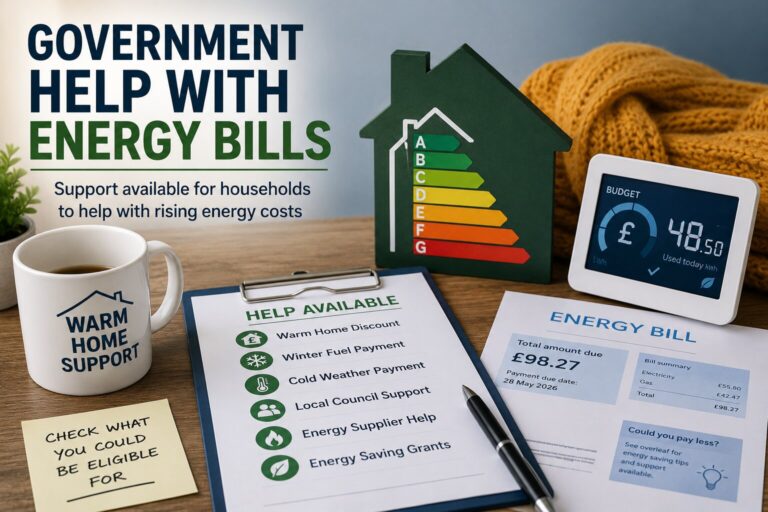
Energy bills are a common source of hardship for low income families. Support may be available through supplier hardship funds, charitable energy trusts, repayment plans, fuel vouchers, local council schemes or the Warm Home Discount.
The Warm Home Discount is not paid as cash to the household. It is applied as a discount to the electricity bill for eligible households when the scheme is open.
Some water companies also offer social tariffs or hardship support. Eligibility varies, and families should contact their supplier directly if they are struggling with water bills.
Where energy debt has built up, it is sensible to seek debt advice as well as grant support. A grant may clear or reduce arrears, but the family may still need a realistic payment plan and help with ongoing affordability.
Housing And Rent-Related Help
Low income families facing housing pressure may be able to access local support, especially if they are at risk of homelessness, struggling with rent, moving from temporary accommodation or setting up a new home.
Housing-related help may include council crisis support, homelessness prevention, rent deposit schemes, housing payments, local welfare support, charity grants or help from a housing association.
The rules depend heavily on location and housing status. A family in social housing may have different options from a family renting privately. A family facing eviction should seek advice quickly from the council, Citizens Advice, Shelter or another housing advice service.
For more detail, readers may want to look at government grants for housing, although many housing support routes are discretionary and targeted rather than broad grants.
Home Care And Disability-Related Support
Some families are dealing with care needs at home, either for a disabled child, disabled adult, older relative or family member with health needs. In these situations, support may come through adult social care, children’s services, disability benefits, carers’ support, home adaptations or specialist charities.
Disabled Facilities Grants may help with certain adaptations where a disabled person needs changes to access and use the home. This is not a general family grant, but it can be important where housing conditions affect health, mobility or independence.
Families should not assume that all home care support is provided as a cash grant. Some help may come through assessments, direct services, adaptations, personal budgets or care packages.
This connects with the wider question of home care grants and support options, where the right route often begins with a council assessment.
Health And Dental Costs
Low income families may be able to access help with NHS health costs, including prescriptions, dental treatment, eye tests, glasses or travel to hospital appointments. Eligibility can depend on benefits, income, age, pregnancy, children and other circumstances.
Dental implants are more complicated. They are not usually provided as routine NHS dental treatment, and claims about government grants for implants should be treated carefully. In some cases, NHS treatment may be available where there is a clinical need, but cosmetic or private implant costs are unlikely to be covered by a simple grant.
Readers looking at this issue should approach government grants for dental implants with caution and check NHS options before relying on online claims.
Avoiding Repayable Support Mistakes
When money is tight, it can be tempting to accept any offer of help. But families should distinguish grants from repayable support.
A Universal Credit Budgeting Advance can help with certain one-off costs, such as household items, clothing, repairs or moving costs. However, it must be repaid, which reduces future Universal Credit payments.
Credit cards, payday loans, rent-to-own products and high-cost borrowing can also make problems worse. If a family is considering borrowing for essentials, it may be better to seek debt advice first.
A genuine free grant should not usually require an upfront fee. Be cautious of websites promising guaranteed grant approval in exchange for payment or personal information.
How To Apply More Effectively
A good grant application should explain the need clearly. Families should avoid vague wording and focus on the practical issue.
For example, instead of saying “we need help because we are struggling”, explain that the washing machine has broken, there are children in the household, laundry costs have become unaffordable, and the family cannot replace it from current income.
Evidence may include benefit statements, bank statements, bills, rent details, letters from schools, medical evidence, tenancy information, photographs of broken items or a supporting letter from a professional.
It also helps to keep a record of applications. Note the fund name, date, documents submitted and outcome. If one application is refused, the reason may help identify a better route.
Conclusion
Free grants for low income families do exist, but they are not usually provided through one simple national scheme. Support is spread across councils, charities, schools, energy funds, maternity schemes, disability support, housing routes and local organisations.
The best approach is to start with the specific need, check local council support, use charity grant search tools, ask schools or support workers about local schemes, and make sure benefits are correct.
Families should also be careful to distinguish grants from repayable advances or loans. A grant can provide valuable help with essential costs, but ongoing financial difficulty may also require benefit advice, debt support, housing advice or wider practical help.
A realistic, evidence-based search gives families the best chance of finding support that is genuinely available.
Would you like to write for us on finance, including on grant funding? We’re open to guest posts from informed contributors.