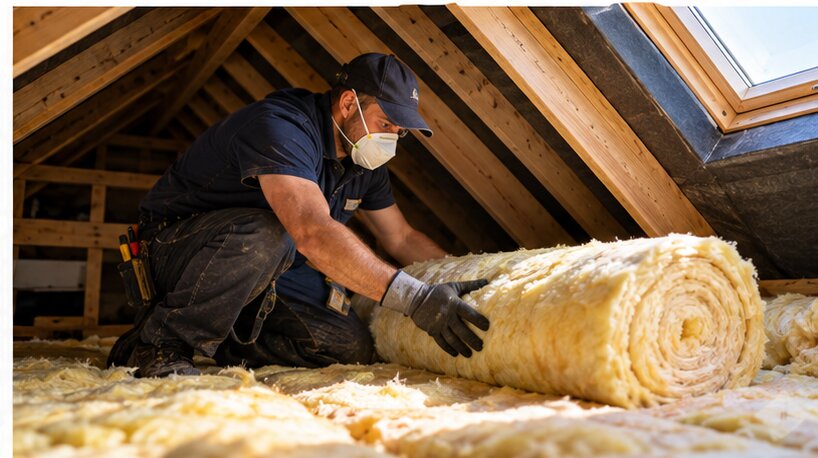
Can I Get A Grant To Insulate My Home?
Insulation is one of the first things I would investigate if my home is difficult or expensive to heat.
Unlike some home improvements, insulation has been a major focus of government energy-efficiency programmes because reducing heat loss can lower the amount of energy a household needs.
Grants and fully funded insulation are therefore genuinely available to some households.
However, the schemes operating in 2026 are different from those I may have encountered in older articles or adverts.
I would check what is currently available before arranging any work.
Has The Great British Insulation Scheme Closed?
Yes.
The Great British Insulation Scheme closed on 31 March 2026.
This is particularly important because plenty of older online material still describes it as a current source of insulation funding.
The scheme supported insulation in less energy-efficient homes and was available to a broader group than some earlier programmes.
Its closure does not mean government-funded insulation has disappeared completely.
Instead, I need to look at the remaining and newer schemes.
What Is The Warm Homes: Local Grant?
If I live in England, the Warm Homes: Local Grant is now one of the most important schemes to investigate.
It can provide free energy-saving improvements to qualifying homes.
My property needs to be privately owned, either by me or a landlord, and normally needs an Energy Performance Certificate rating of D, E, F or G.
My household income will usually need to be £36,000 a year or less.
However, I could potentially qualify with a higher income if somebody in my household receives certain benefits or if I live in a qualifying postcode area.
This makes it worth checking rather than ruling myself out based on income alone.
What Types Of Insulation Could I Receive?
The Warm Homes: Local Grant can potentially fund several different forms of insulation.
These can include wall insulation, loft insulation and underfloor insulation.
The appropriate measure depends on the property.
A survey is therefore important.
I would not assume that because my neighbour received cavity-wall insulation, the same work is suitable for my home.
Different building types require different approaches.
Will I Have To Pay Towards The Work?
Eligible owner-occupiers can potentially have agreed improvements arranged and paid for through the scheme.
Private landlords may be required to contribute in some circumstances.
I would establish this before agreeing to anything.
I would also check exactly which work is included, whether there are any associated costs and what happens if additional repairs are discovered during installation.
A legitimate scheme should make these arrangements clear.
Is ECO4 Still Available?
ECO4 remains relevant in 2026.
It is designed to improve the energy efficiency of homes occupied by low-income, fuel-poor and vulnerable households.
The scheme was extended and now runs until 31 December 2026.
Unlike the Great British Insulation Scheme, ECO4 generally takes a whole-house approach.
This means an assessment looks at the overall property and determines a package of measures needed to improve its energy performance.
Insulation can form an important part of that package.
How Do I Qualify For ECO4?
Eligibility is more complicated than simply being on a low income.
Certain benefits can provide a route into the scheme, and local authorities can also identify households through flexible eligibility arrangements.
The property itself must also meet scheme requirements.
Even if I appear eligible, that does not guarantee that an energy supplier or installer will offer work.
This is an important distinction because some advertising makes the process sound automatic.
I would regard an eligibility check as the beginning of the process rather than a promise of free insulation.
Can I Get Loft Insulation?
Potentially.
Loft insulation is one of the most familiar ways to reduce heat loss from a home and can be included within energy-efficiency programmes where appropriate.
If my loft has little or no insulation, it may be one of the measures identified during an assessment.
I would not install additional insulation blindly, though.
If insulation already exists, I would check its condition and depth and make sure there are no moisture or ventilation problems that need addressing.
What About Cavity-Wall Insulation?
Cavity-wall insulation can also be suitable for some properties.
However, not every wall has a cavity and not every property with cavity walls is necessarily suitable for insulation.
Exposure, construction and the condition of the walls can all matter.
This is why I would want a proper assessment rather than accepting a cold call from somebody who has never inspected my home.
Poorly specified or installed insulation can create problems rather than solving them.
Can Solid Walls Be Insulated?
Yes, although this is generally a more substantial project.
Solid-wall insulation can be fitted internally or externally, depending on the property and circumstances.
The cost is usually much higher than straightforward loft insulation, which makes grant support particularly valuable where it is available.
Again, I would want the property properly assessed.
Changes to walls can affect ventilation, moisture movement and the appearance of a building, so the work needs to be appropriate.
What If I Rent?
Private tenants may potentially benefit from some energy-efficiency schemes, but the landlord will need to be involved.
I would not arrange major insulation work myself without permission.
The Warm Homes: Local Grant can cover privately rented homes, although landlords may need to contribute depending on the circumstances.
If I live in social housing, different funding arrangements may apply and I would contact my landlord or housing association.
What Help Is Available In Scotland?
Scotland has separate programmes, including Warmer Homes Scotland.
This provides heating and energy-efficiency improvements for eligible households living in or at risk of fuel poverty.
Insulation can form part of the support provided.
I would check current Scottish eligibility rather than using an English income threshold or assuming that the Warm Homes: Local Grant operates throughout Britain.
What About Wales?
Wales operates its own Warm Homes arrangements.
Support is targeted towards households experiencing fuel poverty and can include improvements intended to make homes warmer and more energy efficient.
I would check the current Welsh scheme and obtain an assessment rather than relying on older information about previous phases of energy programmes.
Some UK-wide or Great Britain-wide schemes also operate alongside nation-specific support, which can make the landscape confusing.
What About Northern Ireland?
Northern Ireland has separate arrangements for domestic energy-efficiency support.
I would therefore use Northern Ireland-specific information rather than assuming that ECO4 or the Warm Homes: Local Grant applies.
This is particularly important when reading commercial websites that use the term “UK insulation grant” very broadly.
Do I Need An EPC?
For the Warm Homes: Local Grant, the energy performance of the property is important.
Eligible homes generally need an EPC rating between D and G.
If I do not know my rating, that does not necessarily prevent me from starting the process.
The scheme can establish the position as part of the application and assessment.
An EPC is useful because it provides a broader picture of the home’s energy performance rather than concentrating on a single feature.
Beware Of Cold Callers
I would be cautious if somebody unexpectedly contacted me claiming that my property had already been approved for government-funded insulation.
A legitimate scheme should be identifiable.
I would ask for the exact scheme name, who is funding the work and which organisation is responsible for the installation.
I would then verify the information independently.
I would be especially wary of pressure to sign paperwork immediately or claims that funding will disappear within hours.
Insulation May Be Better Than Chasing A Cash Grant
One thing I would keep in mind is that I may never actually receive grant money myself.
Under schemes such as the Warm Homes: Local Grant, the council can arrange and pay for approved improvements.
From my perspective, that can be better than receiving cash because I do not need to find an installer and fund the work upfront.
The important benefit is the improvement to my home rather than the form in which the financial assistance arrives.
If my property is cold, inefficient and expensive to heat, I would check my eligibility before paying privately for insulation.
Although one major insulation scheme has now closed, substantial support still exists for qualifying households.
I would start with the current schemes, get the property properly assessed and make sure any insulation installed is suitable for the way my home was built.