UK Cost Of Living Payments Explained
UK cost of living payments were introduced to help eligible households during a period of rising prices, higher energy bills and wider financial pressure.
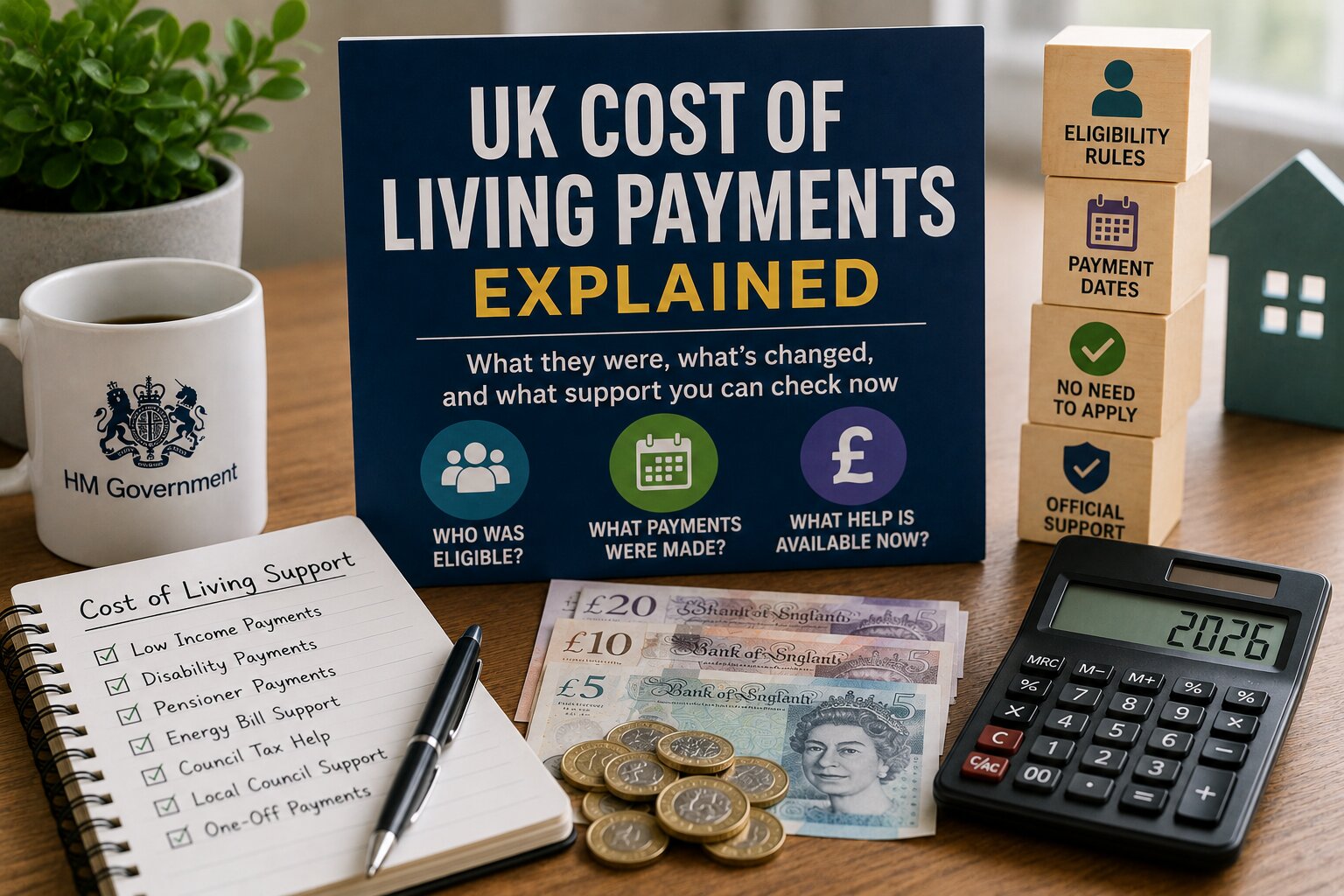
For many people, the phrase “cost of living payment” still refers to the direct government payments made between 2022 and 2024. These were paid to eligible people on certain benefits or tax credits, as well as some disabled people and pensioner households.
However, it is important to understand that those payments were linked to specific qualifying dates and payment periods. They were not a permanent benefit and should not be confused with ongoing support such as Universal Credit, Pension Credit, council tax reduction or local crisis help.
If you are looking for help in 2026, the key question is not only whether a cost of living payment is available, but what other support may apply to your situation now.
Are There Cost Of Living Payments In 2026?
There is no general Cost of Living Payment for 2026, and no further payments are currently planned under that specific scheme.
This is one of the most important points to check, because many older articles, social media posts and forum discussions still refer to previous payments. Some of that information may have been correct at the time, but it may no longer apply.
The earlier payments were made during specific periods between 2022 and 2024. Eligibility was based on receiving certain benefits or tax credits during set qualifying dates.
That means someone who is struggling with costs in 2026 should not assume they will automatically receive a new cost of living payment. Instead, they should check the current support available through benefits, local council schemes, energy bill support and other forms of government help.
For a wider starting point, our guide to financial help from the UK government explains the main types of support people may be able to check.
What Were Cost Of Living Payments?
Cost of living payments were extra payments made to help eligible people with rising living costs.
They were separate from normal benefit payments and were generally paid automatically to people who qualified. This meant eligible people did not usually need to apply for the payment.
The scheme included different types of support, such as:
- low income benefits and tax credits Cost of Living Payments
- Disability Cost of Living Payments
- Pensioner Cost of Living Payments
These payments were designed to reach people who were already receiving certain forms of support or who met particular eligibility conditions.
The payments were not taxable and did not reduce existing benefits or tax credits. However, eligibility depended on strict rules, including qualifying dates and the type of benefit being received.
Low Income Cost Of Living Payments
The main cost of living payments were aimed at people receiving certain low income benefits or tax credits.
These included people on benefits such as Universal Credit, Pension Credit, Income Support, income-based Jobseeker’s Allowance, income-related Employment and Support Allowance, Child Tax Credit or Working Tax Credit, provided they met the relevant conditions.
Across the scheme, payments included amounts such as £326, £324, £301, £300 and £299. These were not paid all at once to everyone. They were linked to different payment windows and eligibility periods.
A key point is that not every person receiving a benefit automatically qualified in every situation. For example, some people may not have been eligible if their Universal Credit award was reduced to zero during the relevant assessment period.
This is why cost of living payment eligibility was sometimes more complicated than it looked from headlines alone.
Disability Cost Of Living Payments
Separate Disability Cost of Living Payments were made to eligible people receiving certain disability-related benefits during the relevant qualifying dates.
These included benefits such as Personal Independence Payment, Disability Living Allowance, Attendance Allowance and some equivalent disability payments in Scotland or through other routes.
These payments were intended to recognise that disabled people can face higher living costs, including costs linked to care, energy, transport, equipment or day-to-day support needs.
Again, these payments were tied to specific qualifying dates. Being eligible for disability support now does not automatically mean a new Disability Cost of Living Payment is available in 2026.
However, people with disabilities or long-term health conditions may still be able to check other forms of help, including disability benefits, local council support, energy supplier support, housing help or reductions linked to council tax.
Pensioner Cost Of Living Payments
Pensioner Cost of Living Payments were linked to Winter Fuel Payment entitlement for earlier winters.
Eligible pensioner households received an extra amount alongside their normal Winter Fuel Payment during the relevant years. This was separate from other cost of living payments that may have applied to people on low income benefits or tax credits.
Pensioners looking for support in 2026 should check current pensioner help rather than relying on old payment announcements.
This may include Pension Credit, Winter Fuel Payment rules, council tax reduction, housing support, energy bill help and local schemes. Pension Credit is especially important because it can act as a gateway to other forms of help for some older people.
If an older person has a low income, they should not assume they are ineligible just because they receive State Pension, own their home or have modest savings.
Why Older Cost Of Living Payment Information Can Be Misleading
Cost of living payment information is easy to misunderstand because many pages remain online after a scheme has ended.
An article from 2023 may mention an upcoming payment, but that does not mean the payment is still available. A social media post may refer to a qualifying date, but that date may have passed years ago. A payment table may be useful historically, but not as a guide to current support.
When reading about cost of living payments, check:
- the publication date
- the qualifying dates
- whether the scheme is still open
- whether the information is from an official source
- whether it applies to England, Scotland, Wales or Northern Ireland
- whether the support is national or local
This is especially important for people searching urgently for money help. Outdated information can waste time and create false expectations.
What Support Replaces Cost Of Living Payments?
There is no single replacement for the previous cost of living payments.
Instead, support in 2026 is spread across different systems. Depending on someone’s circumstances, this may include benefits, local council help, energy bill support, council tax reduction, housing support, childcare support, pensioner help or disability-related support.
This can make the system harder to navigate because there is no one payment that covers everyone.
A household facing financial pressure may need to check several routes:
- whether they qualify for benefits or an increase in existing benefits
- whether their council offers local crisis support
- whether they can get help with council tax
- whether energy bill support is available
- whether they can access housing-related help
- whether pensioner, disability or childcare support applies
Our article on government financial support programmes in 2026 gives a broader overview of the main types of help people may be able to check.
Local Council Crisis Support
Local councils can be an important route for people struggling with essentials.
In England, help with urgent costs may be available through local council crisis support. This can include help with things such as food, energy bills, water bills, essential items or housing-related pressure.
The exact support available depends on the council. Some councils may provide vouchers, direct payments, help through local charities or support for specific household needs.
People do not always need to be receiving benefits to ask their council about crisis support. However, councils set their own rules and may ask for evidence of financial difficulty.
This type of help is usually intended for people who are vulnerable, facing hardship or unable to afford essentials. It is not the same as a national cost of living payment, but it may be one of the most relevant options for someone needing urgent support.
Help With Energy Bills
Energy bills remain one of the biggest cost pressures for many households.
Although the earlier cost of living payments have ended, some people may still be able to access help with energy costs. This could include supplier hardship funds, payment plans, the Warm Home Discount, local council support or winter-related help for eligible households.
The type of help available depends on household circumstances, benefit status, supplier rules and current schemes.
Anyone struggling with energy bills should contact their supplier as early as possible. Suppliers may be able to discuss repayment options, support funds or extra help for vulnerable customers.
For a focused guide, our article on government help with energy bills explains the main forms of support households may want to check.
One-Off Payments And Emergency Help
Some people searching for cost of living payments are really looking for one-off emergency help.
This may be support for a sudden bill, food, fuel, essential household items, rent pressure or another urgent cost.
One-off help is more likely to be local or situation-specific than automatic. It may come through a council, welfare fund, charity, hardship scheme or benefit-related advance.
Because these payments are not always widely advertised, people may need to check local council pages, benefits guidance and support organisations.
Our guide to sourcing one-off payments from the UK government explains how to look for this type of help without relying on outdated cost of living payment announcements.
Watch Out For Scams
Cost of living payments have been used in scam messages, especially when people are expecting help or searching for urgent support.
Be cautious if you receive a text, email or social media message saying you must apply for a payment through a link. Be especially careful if it asks for bank details, passwords, a fee or copies of personal documents.
Previous cost of living payments were usually paid automatically to eligible people. If a message claims you must urgently apply for a new payment, check through official channels before responding.
Scams often use realistic wording, logos or deadlines to create pressure. If something feels suspicious, do not click the link.
Sharing Clear Information About Financial Support
Financial support systems can be confusing, especially when old schemes, new schemes and local help are discussed together.
Commerce Grants publishes clear guides on grants, government support, personal finance and household money topics. Writers who want to share clear finance guidance with readers can review our Write For Us Finance page for contributor information.
The most useful finance content is careful, current and realistic. It should help readers understand where to check next without promising support that may not be available.
Conclusion
UK cost of living payments were temporary payments made between 2022 and 2024 to help eligible people during a period of financial pressure. They included payments for people on certain low income benefits or tax credits, disability-related payments and pensioner payments linked to Winter Fuel Payment entitlement.
There is no general Cost of Living Payment for 2026, and people should be careful when reading older information online.
If you are looking for help now, it is better to check current routes such as benefits, Pension Credit, council tax reduction, energy bill help, local council crisis support, housing help and one-off emergency support.
The name of the scheme may have changed, but help may still be available depending on your circumstances. The key is to check current eligibility, use official sources and avoid relying on outdated payment announcements.