Can I Get A Grant To Make My Home More Accessible?
If disability or reduced mobility makes it difficult for me to move around my home, use the bathroom or get safely in and out of the property, adaptations can make an enormous difference.
Unfortunately, substantial adaptations can also be expensive.
This is one area where a well-established grant system genuinely exists.
Disabled Facilities Grants can help eligible people in England, Wales and Northern Ireland pay for adaptations needed to live more independently at home.
Scotland has different arrangements.
What Is A Disabled Facilities Grant?
A Disabled Facilities Grant, often shortened to DFG, provides financial help towards necessary home adaptations for disabled people.
The grant is administered by local councils.
It can apply whether the disabled person is an adult or a child and can potentially support a wide variety of adaptations.
The purpose is not general home improvement.
The work needs to be necessary and appropriate to meet the disabled person’s needs, and it must also be reasonable and practicable given the property.
What Can The Grant Pay For?
The range of possible adaptations is quite broad.
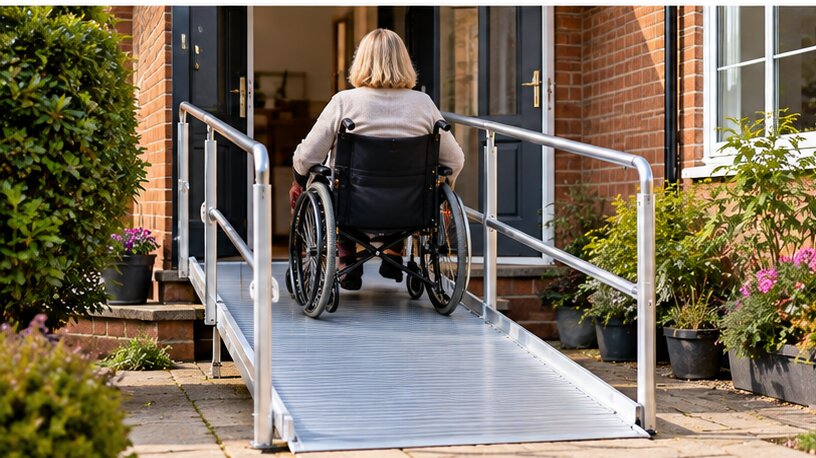
It can include improving access into and around the home, widening doors, installing ramps or making it easier to reach important rooms.
Bathroom adaptations are common. That could include providing an accessible shower or making toilet and washing facilities easier and safer to use.
The grant can potentially help with access to a bedroom, kitchen or garden and with suitable heating or controls.
In some circumstances, an extension may be appropriate, such as providing a downstairs bedroom.
Assistive technology can also potentially form part of an adaptation.
How Much Can I Get?
The maximum standard grant varies depending on where I live.
In England, I can currently apply for up to £30,000.
The maximum in Wales is £36,000 and in Northern Ireland it is £25,000.
Some councils may provide additional assistance above the normal maximum through their own policies.
Scotland does not use the same Disabled Facilities Grant system, so I would investigate the Scottish support available for equipment and home adaptations separately.
Is The Grant Means-Tested?
For adults, usually yes.
The amount I receive can depend on household income and savings over £6,000.
That could mean I am expected to contribute towards the work.
The rules are different for disabled children under 18. Their parents’ income is not taken into account for the grant in the same way.
Landlord applications are also treated differently.
I would therefore apply rather than assuming my income automatically makes me ineligible.
Do I Have To Own My Home?
No.
Homeowners can apply, but tenants can also potentially benefit.
A landlord can apply where a disabled tenant needs adaptations.
If I am renting, I would speak to the council and my landlord about the process rather than arranging structural alterations myself.
Social landlords may also have their own arrangements for adaptations.
How Does The Assessment Work?
The process normally begins with establishing what the disabled person needs.
An occupational therapist may assess how I use my home and the difficulties I experience.
That assessment can identify the adaptations likely to improve safety and independence.
I might have a particular solution in mind, but I would be prepared for the professional recommendation to be different.
The grant is intended to meet the assessed need rather than necessarily fund my preferred design.
Could I Get A Walk-In Shower?
Potentially.
Bathroom adaptations are a common reason for seeking assistance.
If I cannot safely get into and out of a bath, an accessible shower may be an appropriate solution.
The work could involve more than simply changing the shower itself. The room layout, flooring, access and other features may also need consideration.
I would wait for the assessment before purchasing equipment.
The separate guidance on grants for a new bathroom explains why disability-related work is very different from an ordinary bathroom renovation.
Could I Get A Stairlift?
A stairlift may be one way of improving access between floors.
Whether it is the appropriate solution depends on my circumstances and the property.
Other options might sometimes be considered, including altering where essential facilities are located.
Again, I would focus on the outcome I need — being able to use my home safely — rather than beginning with a fixed product.
What About Ramps And Wider Doors?
These can also potentially be covered.
If steps prevent me entering my home independently, alterations to improve access may be considered.
Doorways can potentially be widened where necessary to allow wheelchair access.
Access to the garden can also be included where appropriate.
The exact work will depend on the assessment.
Can The Grant Pay For An Extension?
Potentially, in certain circumstances.
If existing rooms cannot reasonably be adapted to meet the disabled person’s needs, additional space may sometimes be required.
For example, an extension might provide an accessible downstairs bedroom.
This is obviously a much larger project than installing a grab rail or ramp, so cost and practicality become important considerations.
The council will need to be satisfied that the proposed solution is necessary, appropriate and reasonable for the property.
What If The Work Costs More Than £30,000?
For somebody living in England, a complex adaptation can exceed the standard £30,000 maximum.
That does not necessarily mean the project is impossible.
Councils can have policies allowing them to provide additional discretionary assistance.
Other funding sources may also be relevant.
I would discuss this with the council as soon as the likely cost becomes clear rather than assuming I must personally fund the entire difference.
There may also be alternative ways of meeting the assessed need.
Will A DFG Affect My Benefits?
Receiving a Disabled Facilities Grant does not normally reduce my benefits.
The grant is there to fund specific adaptations to the property.
That makes it very different from receiving additional regular income.
I would still provide accurate financial information during the application process where the means test applies.
Should I Start Work Before Approval?
No, not if I am relying on the grant.
This is one of the most important practical points.
I might not receive funding if I start the work before the council approves the application.
I would therefore wait for formal approval and follow the council’s process.
That may involve obtaining quotations and using contractors in a particular way.
Starting early because I assume approval is inevitable could leave me with a very large bill.
How Long Could It Take?
Major adaptations are unlikely to happen overnight.
There can be assessments, financial checks, designs, quotations and approvals before work begins.
Complex building work can take considerably longer than installing a relatively simple adaptation.
If my needs are urgent, I would make that clear during the assessment.
I would also ask whether temporary equipment or smaller measures could help while I wait.
Could Smaller Adaptations Be Provided Differently?
Yes.
Not every accessibility improvement requires a Disabled Facilities Grant.
Smaller items and pieces of equipment may be available through health, social-care or local authority services without requiring a major grant application.
That might include relatively straightforward equipment designed to make daily activities safer.
I would therefore ask for an assessment of my needs rather than assuming that every solution requires building work.
Adapt The Home Around The Person
For me, the most useful way to approach accessibility funding is to start with the difficulties I experience rather than a shopping list of adaptations.
I might struggle to climb stairs, get into the bath, enter the front door or control the heating.
Those are the problems I would describe.
The professionals involved can then consider what changes are necessary to overcome them.
Unlike many supposed “government grants” advertised online, the Disabled Facilities Grant is an established source of substantial financial assistance for qualifying adaptations.
If disability is making my home difficult or unsafe to use, I would contact my local council before paying for major work myself.